

Netflix (NFLX +0.35%) made a big splash recently, announcing its intent to acquire certain assets from Warner Bros. Discovery, including the company's film and television studios, as well as HBO and its associated streaming service HBO Max. Warner Bros. would retain its cable assets. The deal immediately prompted antitrust concerns, especially after President Donald Trump said the deal "could be a problem."
Additionally, Paramount Skydance, which was also involved in the bidding, submitted a hostile bid after Netflix's announcement, stating it believed it is the only company that could obtain regulatory approval.
Ultimately, here's why I think Netflix's proposed acquisition of certain Warner Bros. assets is likely to receive regulatory approval from the Trump administration.
Netflix will argue that the streaming market has broadened
When examining the streaming market in the U.S., it's fairly easy to see why there could be antitrust concerns. According to data from Statista, Netflix controlled about 21% of the U.S. streaming market at the end of 2024, 1% less than Amazon's Prime Video. Disney+ and Hulu collectively had 23% of market share (Hulu is owned by Disney).
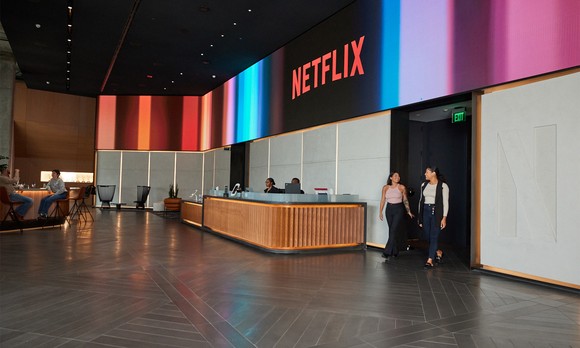
Image source: Netflix.
Meanwhile, Max controlled 13% of U.S. market share. Netflix has also performed extraordinarily well this year, so it would not be surprising to see the acquisition give it more than the suggested 34% share of the U.S. streaming market that Netflix would have with HBO.
However, Netflix's Co-CEOs Greg Peters and Ted Sarandos, in a recent letter to Netflix staff, argued that the streaming market is not so narrow, and actually includes the likes of Alphabet's YouTube, which is a short- and long-form content powerhouse:
Also, if you look at it through the lens of Nielsen data, even after combining with Warner Bros., our view share would only move from 8% to 9% in the U.S. -- still well behind YouTube (13%) and a potential Paramount/WBD combination (14%). We believe the facts speak for themselves, and we're fully prepared to put ourselves in a strong position for approval
Now, I can certainly see why regulators might view this as a stretch, because YouTube offers such a wide variety of content, including short consumer-made videos, companies producing video podcasts, and even cable service through YouTube TV, although I'm not sure if this would be included in the Nielsen data.
On the other hand, I think it's safe to say that consumer viewing habits have shifted significantly in recent years, largely due to shorter attention spans among consumers, and with platforms like YouTube and TikTok capturing more eyeballs than ever before.
Netflix is also investing in video podcast content, indicating that it views it as a future part of its business. I also suspect Netflix will wade into other areas of content as it continues to grow and seek out new sources of revenue.
The deal has a high chance of approval
Despite skepticism, I believe there is a high likelihood that Netflix will receive regulatory approval for the acquisition. For one, the board of directors of Warner Bros. recently urged shareholders to vote against Paramount's bid, finding it "inferior" to Netflix's offer. While Paramount offered over $108 billion, higher than Netflix's offer, which had an enterprise value of nearly $83 billion, Paramount was bidding on Warner Bros. in its entirety, including the cable assets.
Furthermore, Warner Bros.' board said they didn't buy all the claims Paramount made about having its offer fully guaranteed by billionaire Larry Ellison, one of the richest people in the world and the CEO of Oracle. The board also said Paramount's bid comes with "significant risks."
Additionally, I don't necessarily see a combined Netflix and HBO meeting the definition of a monopoly. The U.S. Federal Trade Commission's definition of monopolization states on its website that courts typically do not view a monopoly if the company in question has "less than 50% of the sales of a particular product or service within a certain geographic area. Some courts have required much higher percentages."

NASDAQ: NFLX
Key Data Points
While market share is different from sales, the Netflix-HBO tie-up would have considerably less than 50% market share, and Netflix recently said that 75% of HBO Max members already subscribe to Netflix.
Netflix will also still have significant competition, whether from Amazon Prime or Disney/Hulu, and I think consolidation will continue in the industry. I'm not sure that consumers currently like all the different streaming options, each with a cost, and which may only offer one or two shows or movies that any given subscriber is interested in.
Furthermore, while some argue it's a stretch to include YouTube in the streaming market, we've seen recently that other federal judges will consider this argument about a widening market. Recently, a U.S. federal judge ruled that while Google operates a monopoly in the traditional search space (with a 90% market share), outside competition from artificial intelligence (AI) chatbots like OpenAI's ChatGPT could erode its position. Therefore, the judge did not require Google to divest its Chrome web browser.
Lastly, current market indicators suggest the deal has a high likelihood of approval. Warner Bros. Discovery's stock price trades slightly above Netflix's offer, which amounts to $27.75 per share (as of Dec. 18). Betting website Kalshi also places a 71% chance of Netflix successfully taking over Warner Bros.
