

Choosing a Social Security claiming age is one of the most important retirement decisions you'll need to make. The earlier you file, the smaller your monthly payments will be. By delaying benefits until age 70, you'll earn the largest possible checks.
On the surface, it may seem like waiting until age 70 to file is the best choice. While that can be a smart move for some people, there are two important reasons I plan to take Social Security much earlier.

Image source: Getty Images.
1. I want to enjoy retirement while I'm younger
Life will always be unpredictable to some degree, and health issues can arise unexpectedly at any age. As you age, though, it's more likely that health problems might take a toll on your retirement.
Delaying benefits essentially involves betting on your longevity. You're assuming that you'll be able to enjoy all the activities you'd planned for retirement well into your 70s, and while that may be the case for a lot of people, life can throw curveballs sometimes.
Personally, I know I'll rest easier knowing that I'm giving myself as much time as possible to enjoy retirement when I'm younger and healthier. If I end up living a much longer-than-expected lifespan, that's a bonus. But if I delay benefits until age 70 and then develop debilitating health issues just a few years later, I will likely regret waiting so long to take Social Security.
2. My lifetime earnings should be roughly equal at any age
Your monthly income will differ significantly depending on when you begin claiming. But Social Security is designed so that, in theory, your lifetime benefit amount should be equal, no matter what age you begin claiming.
By filing for benefits early, you'll receive smaller monthly checks, but more of them over a lifetime. Delaying benefits will result in fewer checks overall, but each one will be larger.
Now, in reality, these calculations don't always work out so cleanly. If you live a much longer-than-average lifespan, you may earn more in total by delaying benefits. Similarly, those with shorter-than-average lifespans could come out ahead by filing as early as possible.
For those with an average life expectancy, though, your claiming age shouldn't significantly affect your lifetime benefit total. And if I know I'll receive roughly the same amount in total no matter when I claim, I'd prefer to file early.
When it pays to delay benefits
When planning for my personal retirement, my primary goal is to give myself as many years as possible to enjoy an active lifestyle. But that may not be your priority, and that's OK. In some cases, delaying benefits is truly the best option.
Perhaps the best reason to wait until age 70 to file is to increase the size of your monthly payments. Again, your total benefit should be roughly equal, assuming an average lifespan, but your claiming age will have a massive impact on the size of your monthly checks.
To receive the full benefit you're entitled to based on your work history, you'll need to wait to file until your full retirement age -- which is between ages 66 and 67, depending on your birth year. By claiming at 62, your payments will be permanently reduced by up to 30%. Delay until age 70, and you'll earn a bonus of up to 32% on top of your full benefit.
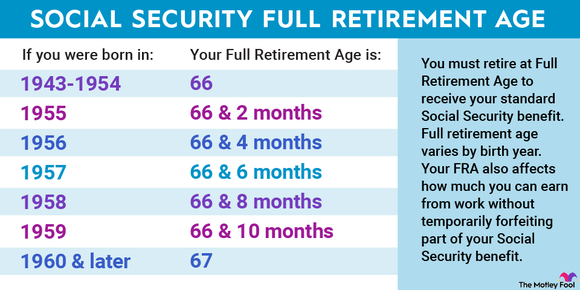
Image source: The Motley Fool.
Sometimes, these reductions and bonuses amount to several hundred dollars per month. In fact, the average retired worker collects around $807 more per month at age 70 compared to age 62, according to December 2024 data from the Social Security Administration.
If your savings are falling short and you're going to be relying heavily on Social Security to make ends meet in retirement, delaying benefits until age 70 and earning the highest possible payments can be life-changing.
The age at which you begin taking Social Security is a highly personal choice that depends on your individual circumstances. While I personally plan on claiming benefits long before 70, it's important to consider your priorities to decide on the right age for your retirement.
