- Thoughts: As an investment advisor, I should start by analyzing the current market conditions and reviewing the client's financial goals and risk tolerance. This will help me determine the appropriate asset allocation for their portfolio. I should also consider the client's time horizon and any specific investment preferences they may have.
- Reasoning: Analyzing the market and the client's financial goals and risk tolerance is the first step in developing an appropriate investment portfolio.
- Plan:
- Analyze the market conditions.
- Review the client's financial goals and risk tolerance.
- Consider the client's time horizon and investment preferences.
- Develop an appropriate asset allocation for their portfolio.
- Criticism: I need to ensure that I am taking into account all relevant factors when developing the investment portfolio and that I am not making any assumptions or taking unnecessary risks.
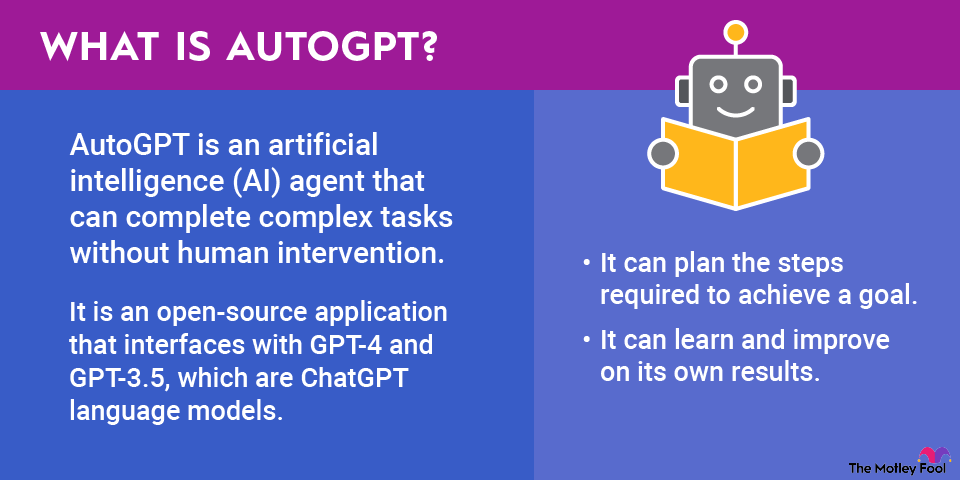
So far, so good. AutoGPT then put the plan into motion by using Google to collect information on the current market conditions.
Next, the application created a text file where I could document my financial goals, risk tolerance, time horizon, and investment preferences.
Here's where things go sideways. For some reason that's unclear, AutoGPT didn't stop and wait for my input but updated the text file on its own. It noted a moderate risk tolerance, long-term time horizon, and three financial goals: Save for retirement, buy a house, and pay for children's education.
In real life, only the retirement goal is applicable to me.
Still, AutoGPT kept working to answer the initial prompt of suggesting an asset allocation. Its recommended portfolio composition was 60% stocks, 30% bonds, and 10% cash. It also started researching specific holdings to fulfill the allocation but errored out and shut down -- not an ideal way to end my AI financial consultation.
Although AutoGPT is interesting and promising, the technology is still in its infancy. Despite its power to solve problems, it can make mistakes, misinterpret information, get diverted into nonessential tasks, and ultimately fail to reach the stated goal. In AutoGPT's current state, you could argue the application is more human in its flaws than in its capabilities.