Understanding premarket trading
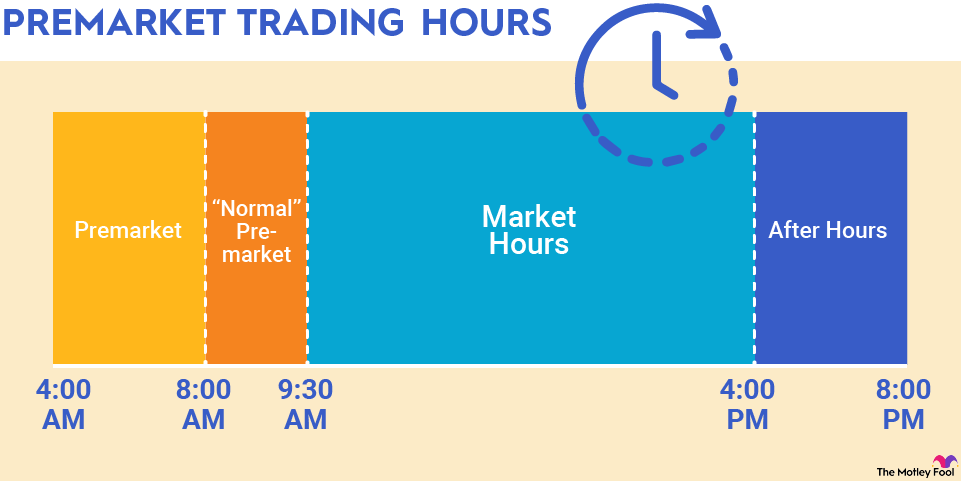
Companies often release important news outside of normal trading hours. For example, some companies will issue their quarterly earnings early in the morning, well before the market opens. Some companies also will wait to issue press releases announcing big partnerships, new products, or executive changes until early in the morning.
Such news can have a meaningful impact on how the market values a stock. It’s why you’ll often see a stock’s share price open at a much different price than its previous close when it releases earnings. If you want to trade on an early morning news release as soon as possible, you’ll need to place an order for the premarket trading session.
How to trade premarket and after hours
Trading in the premarket or after-hours session is a bit different than buying or selling a stock during normal trading hours. While orders during the trading day are routed through an exchange like the Nasdaq or New York Stock Exchange, extended-hours trades use an electronic communications network, or ECN.
An ECN is a service your broker uses to match buy and sell orders and to execute trades. Although it effectively does the job, it has some limitations; traders can only use limit orders on an ECN.
You might be used to placing market orders for stock trades, which will fill at the prevailing rate during the day. With a limit order, you have to name your price, and there’s no guarantee that the trade will execute. If it does execute, however, it’s guaranteed to execute at your price or better.